

Around two years ago, I co-founded a technology company called Suffrago.

I was super confident then that, if we got it right, this could become my life’s work. The idea was much bigger than building another polling website. I thought we could connect enormous amounts of information about the United Kingdom, use AI to find patterns, correlations and perhaps causation that humans would struggle to see, and combine that evidence with what people themselves actually think. Done properly, it could help MPs make better decisions, journalists understand their communities better, citizens understand what is happening around them, and ultimately make the country work a little better. And, yes, if we really got it right, I thought we could build an enormously valuable company too.
Two years on, I’m even more confident about the diagnosis. Building the thing, however, has been considerably harder than diagnosing the problem.
What I’ve learnt about building a technology company
At various points, Suffrago has had around 50 people working with or contributing to it in different capacities. Today there are far fewer. My co-founder eventually left the business, although thankfully we remain on good terms, and I’ve had to find new technical people and effectively rebuild parts of the company around me. I’ve also had to do much of this as sole director while living with a chronic illness that means I can normally only work for a small part of each day.
Technology companies are strange things to build. You can spend months working on something, finally think it is nearly finished, and discover another enormous list of things that need doing. There is an old technology joke that once the first 90% is finished, there is another 90% to go. I now understand it.
But some of the things we believed at the beginning have become much clearer. AI has become vastly more powerful. The cost of analysing enormous quantities of information is falling. More public data can be brought together and modelled. At the same time, trust in politics, journalism, institutions and social media remains a huge problem. Technology can be copied. Trust cannot. So we have spent an extraordinary amount of time not merely building software, but thinking about neutrality, evidence, freedom of speech and how you create somewhere people with completely different views can participate without screaming at each other.
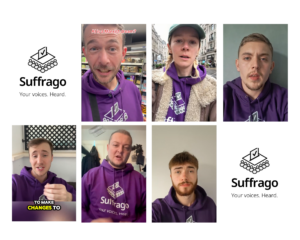
There have also been some wonderful moments. Suffrago gave evidence to the House of Commons Science, Innovation and Technology Committee. We created what we believe was the first constituency-level map of probable suicides across the UK, exposing differences between places that had previously been hidden inside other geographical boundaries. Our work has appeared in national newspapers, including the Daily Express. We trained around two dozen journalists to use video to communicate local information. Forty-seven MPs or their offices have logged into Suffrago, and we have run several local polls attracting around 1,000 participants, including polling that became part of the public debate around major local planning decisions.
None of that means we have cracked it. Far from it.
Now I’d like you to break it
We have just released a much simpler version of Suffrago, and this is where I would love the help of the roughly 500 people who receive my occasional ramblings.
Please go to the website and have a play.
You can now vote on questions directly from the homepage without even logging in. If you want to go further, try creating your own poll and sending it to some friends. You can poll almost anyone, anywhere, for free, allow people to comment and use AI to help understand what people are saying.

The platform isn’t perfect. I know that. There are some substantial developments still to come, and you will probably find things that annoy you. Please tell me about them. I’d much rather hear what doesn’t work than be politely told that everything looks lovely.
We’re trying to build something quite different from social media. We don’t want cookies following you around the internet. We don’t sell your personal information to dodgy companies. We believe strongly in freedom of speech. You can disagree with other people without building a permanent public record that might be dragged up against you years later. The objective isn’t to make everybody agree. It is to understand where people agree, where they don’t, and why.
And every new participant makes the system potentially more useful. More people means more opinions. More opinions create better analysis. More data creates more context. Better insight creates stories and brings in journalists and decision-makers. They bring more questions and more people. Eventually, I hope Suffrago can become a constantly improving picture of what is happening across the country and what the people living here actually think about it.
We’ve also entered another new chapter. Our first employee has just joined as Chief Product & AI Officer, we’re strengthening the financial side of the company, and we’re preparing to raise our next investment round.
That investment will qualify for the UK’s Seed Enterprise Investment Scheme (SEIS). For qualifying investors, SEIS can provide 50% income-tax relief on the amount invested, potential loss relief if the investment fails, and exemption from Capital Gains Tax on qualifying gains if the conditions are met. In very simple terms, a qualifying £1,000 investment can initially have a net cost of £500 after income-tax relief, although everyone’s circumstances are different and proper tax advice is obviously required. We’re going to be talking much more about the investment round shortly.
For today, though, I’m asking for something much simpler.
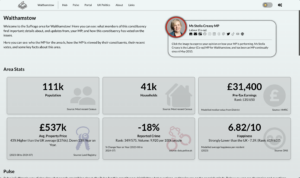
Please visit Suffrago. Vote on a few questions. Try creating one yourself. Break something. Tell me what you like and, much more importantly, what you don’t.
You can email me at andrew.gray@suffrago.org.
And if you know someone who might want to use Suffrago, help us build it, work with us, or invest in what we’re trying to create, please send this to them too.
Two years into building a technology company, I have learnt an awful lot about how difficult it is.
But I believe more strongly than I did at the beginning that this is worth building