

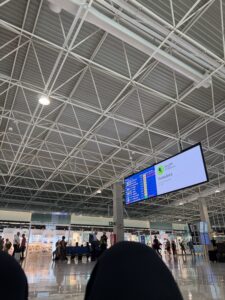
With my suitcase now on its way to the plane, I’m sitting just before passport control at Fuerteventura airport.
Three weeks ago, setting off from Leeds Bradford Airport, the staff looked at me as if they weren’t sure I should fly. Without a wheelchair and someone to push me, I wouldn’t have made it.
When I arrived in Fuerteventura, I needed a kind Canarian airport worker to push me in a wheelchair from the plane to my bus, while pulling my massive suitcase.
Today, I can get by without a wheelchair.
I’m a new man. Every cell is fizzing. I can think, walk and work.
My dysautonomia crash had been so severe, and the stage in my work so important, that I felt I had no choice but to press reset on my autonomic nervous system with a blast of warm weather and vitamin D.
It never fails to help.
There are many reasons why I feel rejuvenated here, but the most important is the temperature. Of that I am certain.
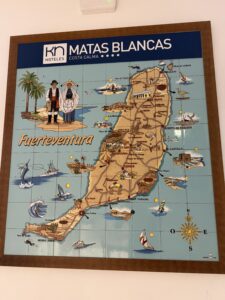
The outside temperature is more or less the same as the inside. Unless, of course, you’re baking yourself in the sun.
This consistency of temperature is key to restoring my body’s homeostasis. My autonomic nervous system doesn’t have to work so hard to regulate my body temperature. I’ve experienced this transformation too many times to doubt the importance of a warm, stable climate.
But what I enjoy most is the brilliant light of the early morning, the relaxed ambience, the abundance of gluten-free food and the general ease of life.
Oh, and the prices.
Many people I know are sniffy about the Canaries. How very wrong. And how very snobbish!
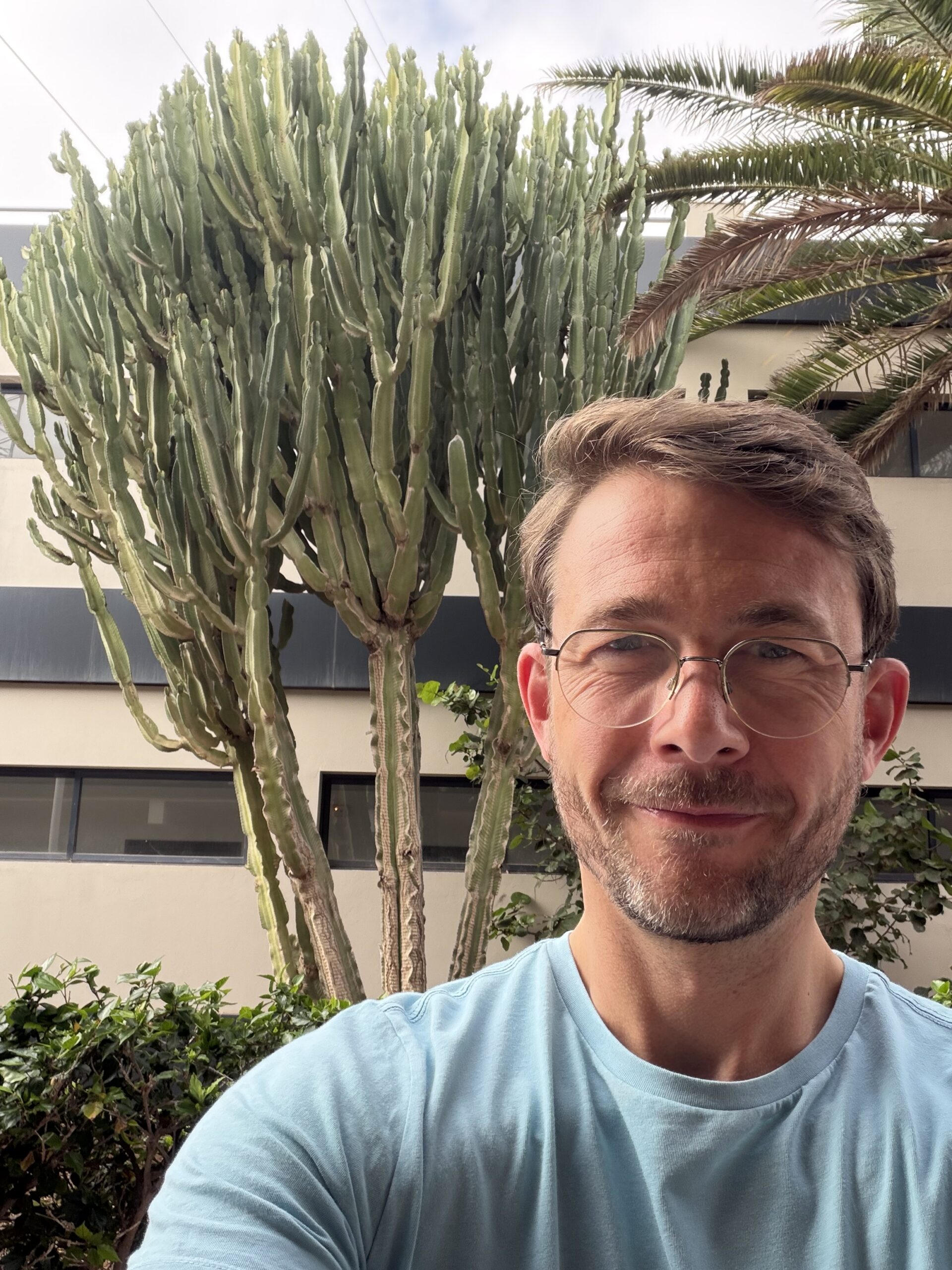
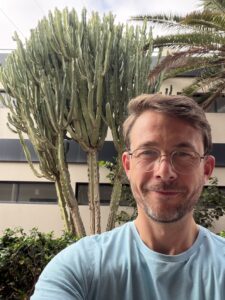
Just look at the extraordinary flora outside my hotel room. Have you ever seen a tree like it? Or is it a cactus? Whatever it is, it’s magnificent.
And islands. I feel an islander in my bones.
My grandma was from the Orkneys and, of all my fabulous grandparents, I look most like her. Perhaps there’s something ancestral going on. In fact, my YouTube feed has algorithmically gravitated towards island life and camper vans. Make of that what you will.
I am, of course, fortunate.
Most people who have ever lived had it considerably harder than me. Indeed, most people alive today do too. I have access to medicines, medical expertise and the ability to fly to a subtropical island to recover.
But I find myself in a rather unusual predicament.
I have a neurological disorder which improves dramatically when I spend time on a warm island, far from my family, friends and the life I’ve built.
Back in Britain, where my family lives, where my work is based and where I belong, my health deteriorates. And for a self-employed person, poor health doesn’t just diminish the enjoyment of life. It diminishes the ability to work, to earn and to provide.
In essence, my country makes me physically unwell.
And the place where I become well is far from the people I love most.
I want to get home. I miss my family. And I’ve learned over the years to listen carefully to my feelings when making important decisions. They often know something that my conscious mind has yet to work out.
Yet returning to the British winter is likely to be detrimental to my health, and therefore to my work, at a particularly important moment.
Indeed, given how dramatically my health has improved, not extending my stay could be a very stupid decision.
And this bind, this predicament, is shared with my family. The evidence of what happens to my body in different climates is incontrovertible. I’ve lived it, repeatedly.
Would you want me to come home?
It’s a question I asked my family, but shouldn’t have. How could they possibly answer?
So, have I chosen well?
For once, my heart and my body appear to be giving me entirely different instructions.
Quite the quandary.